La Fille de Joie Est Triste (L’accordéoniste)
“The Accordionist” (1940)
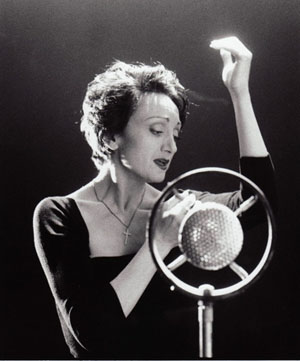
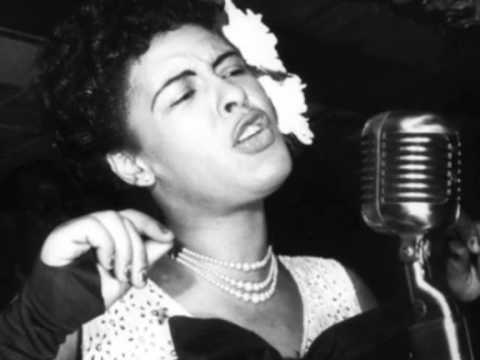
This is a beautiful song written and performed by Edith Piaf (Non, Je Ne Regrette Rien – Inceptionand Tu es Partout – Saving Private Ryan). The chorus gives me chills.
It is about a prostitute who is married to an accordionist who will be going to war soon and will not return to her alive.
Her man will never come back.
Goodbye to beautiful dreams.
Her life is done for.
I interpret her story as though she has to forget her emotions while she’s working, but as soon as she leaves and watches her husband play the Java, she becomes overwhelmed with emotion.
She wants to weep, it’s physical
All of her being is tense
Her breath suspended
The music has wrung her out
This song may be derived from similar life experiences. Piaf was abandoned by her parents and lived with her grandmother who owned a brothel. The prostitutes raised her and took care of her. By the age of 17 she had a child who then died at the age of two. Edith was involved in three near fatal car crashes, resulting in alcoholism that contributed to her liver cancer that took her life.
Such an unfortunate life, contrasted by her huge fame during the 1930s to 60s is tragic. But has most certainly been channelled in her beautifully emotional songs.
Obviously this song is sung in French, but that does not take any of the emotion away at all! Before I knew what she was singing about, I could hear the desperation and longing in her voice.
STOP!
Stop the music.
A beautiful song.
Jodie.
The final chorus from 2.40 is chilling!
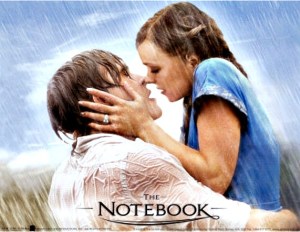
Writers: Jeremy Leven and Jan Sardi. Based on The Notebook by Nicholas Sparks
Director: Nick Cassavetes
Released: 2004
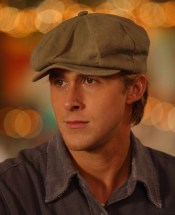
Starring: Ryan Gosling and Rachel McAdams
—
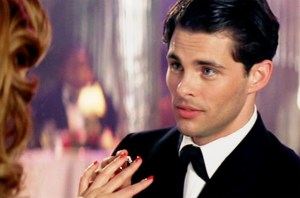
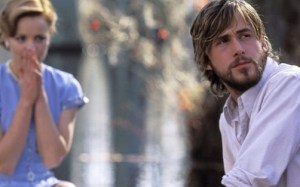
If you haven’t watched this movie, it is basically about a wealthy girl, Allison (RachelMcAdams), who fell in love with a poor country boy, Noah (RyanGosling), whom her parents did not approve of. She was taken away and after a few years was engaged to marry a more ‘appropriate’ man of wealth and status.
That is until Noah comes back into the picture which forces Allison to choose between a respectable, kind young wealthy man or a free spirited, kind young poor man.
As I have mentioned many times in previous posts, romance is not my cup of tea. I don’t enjoy the predictability of them, the smooching, the overly-perfect and much-too-good-looking characters, as well as the either typically happily ever after or tragic endings.
OR the mamsy-pamsy emotional blubbering characters who through the fog of their infatuation are unable to reach logical decisions.
For example, when Noah writes to Allie every day for 365 days after she leaves (he could have just said ‘one year’, but he kept having to make a point of saying “365 days” – for effect I suppose).
Surely, after two weeks maximum, he would have rung her, visited her or at least double checked the address. I. Mean. Seriously! You silly love drunk people…
The Notebook is no exception to my lack of support for the romance genre.
Although I do think that Rachel McAdams is what many women want to look like, and Ryan Gosling is the pin-up boy for Hollywood’s ideal.
He’s not me though; apparently he waxes his whole body on a regular basis because he doesn’t like body hair. Also, he’s too muscley, like, to the point where he looks uncomfortable to hug. Like a rock would be.
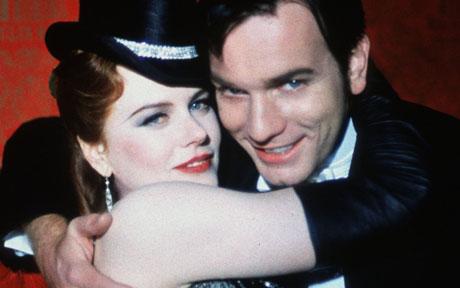
I know what you’re thinking; “but Jodie, you gave Moulin Rouge! – the most romantic film – 9.5/10. Isn’t that hypocritical?”
Well, no, because Moulin Rouge! has integrity making it more believable with various other themes other than love. Plus, its whole basis of ‘the denial of true love’ is ironic since the Bohemian era that it was based in promoted that very thing!
The Notebook and Moulin Rouge! are two very different story lines that are portrayed completely differently with various depths and convincing content. Although their genres overlap, they are apples and oranges.
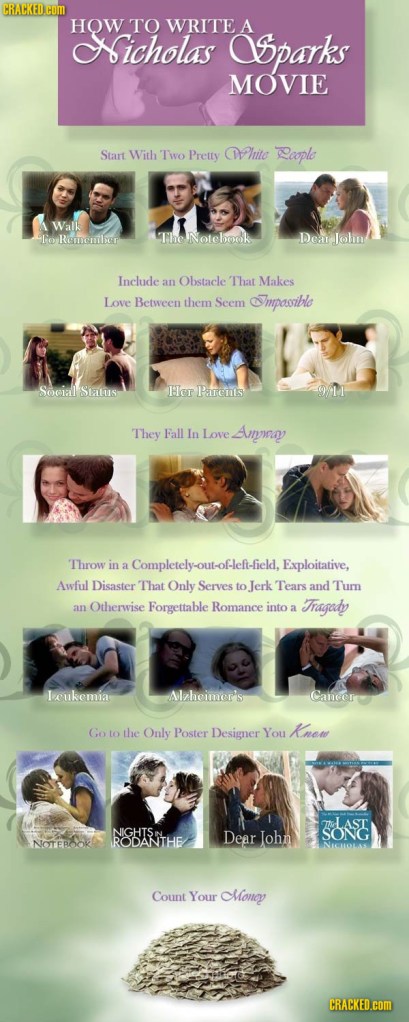
The Notebook is a Nicholas Sparks story, who has written romance novels including Dear John and The Lucky One. I am lead to believe they all strive to follow very similar story lines with similar characters.
Admittedly, for a romance genre it is a tasteful portrayal of the characters falling in love – it’s no 50 Shade of Grey! It’s more intimate than a chick flick but still tame enough for most people to enjoy.
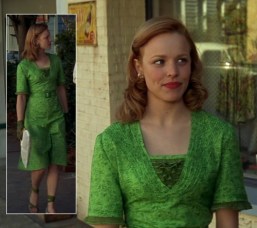
I can definitely agree that the era that The Notebook was set in was pretty awesome. It was based in the 1940s so the dresses, shoes and hair-dos were rather spectacular! I love all of Allie’s wardrobe for sure.
The sets are beautiful, from the house referred to as the “Labour of Love”, to the incredible dream-like lake. The town looks like it is straight out of the forties too.
However, the ridiculously short war scene let the authenticity down. The director obviously forgot to take down notes from the shocking war film Saving Private Ryan. But I guess romance films don’t like having accurate fighting scenes as it may loose their audience who want to be taken away to a land of perfection.
I like having to think about story lines and The Notebook is two dimensional and too simple/predictable – almost cringe-worthy at times.
But, if you love romance, I’m sure you’ll love The Notebook too. It plays out very idealistic love interests with people who are certainly easy on the eye.
I adore this song – it’s relaxing and very reflective of the 1940’s sound.
This song is used in The Notebook as a very romantic song, yet also in Misery as an uneasy tune. It just has a feel about it that fits for the two opposing genre of film, which is unusual.
I hope you enjoy listening, singing and dancing to it as much as I do!
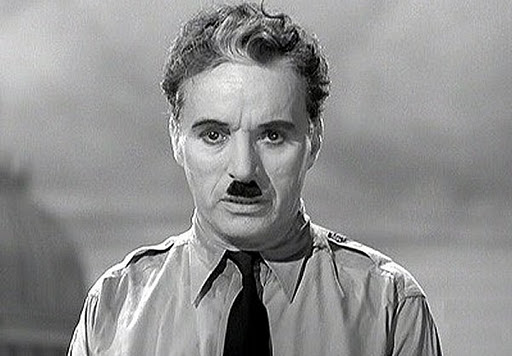
By Charlie Chaplin in 1940, I bring you the greatest speech ever given.
A speech that was ahead of its time, yet delivers important messages of peace, support and kindness from mankind, to mankind that applies today more than ever.
I’m sorry but I don’t want to be an Emperor, that’s not my business. I don’t want to rule or conquer anyone. I should like to help everyone if possible, Jew, gentile, black man, white.
We all want to help one another, human beings are like that. We all want to live by each other’s happiness, not by each other’s misery. We don’t want to hate and despise one another. In this world there is room for everyone and the earth is rich and can provide for everyone.
The way of life can be free and beautiful. But we have lost the way.
Greed has poisoned men’s souls, has barricaded the world with hate;
has goose-stepped us into misery and bloodshed.
We have developed speed but we have shut ourselves in:
machinery that gives abundance has left us in want.
Our knowledge has made us cynical,
our cleverness hard and unkind.
We think too much and feel too little:
More than machinery we need humanity;
More than cleverness we need kindness and gentleness.
Without these qualities, life will be violent and all will be lost.
The aeroplane and the radio have brought us closer together. The very nature of these inventions cries out for the goodness in men, cries out for universal brotherhood for the unity of us all.
Even now my voice is reaching millions throughout the world, millions of despairing men, women and little children, victims of a system that makes men torture and imprison innocent people. To those who can hear me I say “Do not despair”.
The misery that is now upon us is but the passing of greed, the bitterness of men who fear the way of human progress: the hate of men will pass and dictators die and the power they took from the people, will return to the people and so long as men die [now] liberty will never perish. . .
Soldiers: don’t give yourselves to brutes, men who despise you and enslave you, who regiment your lives, tell you what to do, what to think and what to feel, who drill you, diet you, treat you as cattle, as cannon fodder.
Don’t give yourselves to these unnatural men, machine men, with machine minds and machine hearts. You are not machines. You are not cattle. You are men. You have the love of humanity in your hearts. You don’t hate, only the unloved hate. Only the unloved and the unnatural. Soldiers: don’t fight for slavery, fight for liberty.
In the seventeenth chapter of Saint Luke it is written:
“The kingdom of God is within man”
Not one man, nor a group of men, but in all men; in you, the people.
You the people have the power, the power to create machines, the power to create happiness. You the people have the power to make life free and beautiful, to make this life a wonderful adventure. Then in the name of democracy let’s use that power, let us all unite.
Let us fight for a new world, a decent world that will give men a chance to work, that will give you the future and old age and security. By the promise of these things, brutes have risen to power, but they lie. They do not fulfil their promise, they never will. Dictators free themselves but they enslave the people. Now let us fight to fulfil that promise.
Let us fight to free the world, to do away with national barriers, do away with greed, with hate and intolerance. Let us fight for a world of reason, a world where science and progress will lead to all men’s happiness.
Soldiers! In the name of democracy, let us all unite!
 OR the mamsy-pamsy emotional blubbering characters who through the fog of their infatuation are unable to reach logical decisions.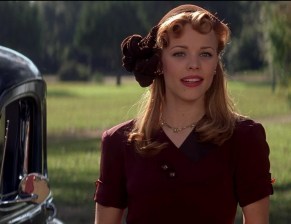
 NZ Film Freak