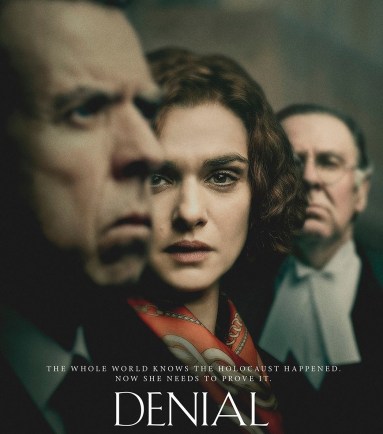
Director: Mick Jackson
Writer: David Hare
Released: September 2016
Starring: Timothy Spall, Rachel Weisz, Tom Wilkinson, Andrew Scott and Jack Lowden
—
A shocking account of David Irving (Timothy Spall), a Holocaust denier, who takes Deborah Lipstadt (Rachel Weisz) to court for speaking out against him. At its very core, its about free speech, and the abuse of it.
Richard Rampton (Tom Wilkinson): This case is happening to you, but it’s not about you.
While I knew there was a theory of the Holocaust never having happened, I wasn’t actually aware there was a specific Holocaust denier, and court case about it.
As I mentioned in my reviews of The Darkest Hour and The Founder, Denial is another good film-alternative to watching a documentary on the issue.
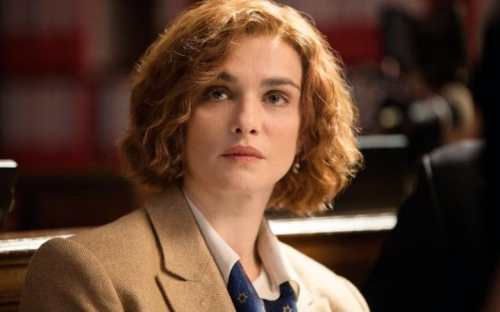
I did find the film interesting. I enjoyed finding out about the theories and what happened. While it seems rather obvious that sadly, the Holocaust did certainly occur, going about proving this 50+ years after the fact in a court of law proved difficult. The Germans ensured that much of the evidence was destroyed just before the end of the war.
Richard Rampton: We know what it is, it’s how we prove what it is.
I also didn’t realise how different the justice systems are between USA and UK. Irving took Lipstadt to court in the UK because Lipstadt would have to prove why Irving is wrong in order to be found innocent. Whereas in USA, Lipstadt would have been innocent unless proven otherwise by Irving.
Deborah Lipstadt: In the US there is the presumption of innocence.
Anothony Julius: Yeah. Not in the UK.
I was expecting it to be a gripping court drama, like A Few Good Men, where the outcome depends on what questions are asked and how they are answered, with loopholes and twists and gasps. I thought Lipstadt’s lawyers would trip Irving up and drill him on his theories.
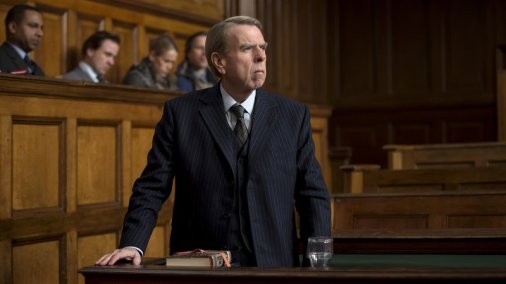
Unfortunately this is only shown in a couple of scenes. In between, it’s mostly showing Lipstadt – a very loud American from Queens, being overbearing and shouting at her lawyers, telling them what they should and shouldn’t do. Despite her being an intelligent and well-read writer, these scenes portrayed her as a headless chook in a state of panic.
Either way, this isn’t where I wanted the conflict to be. The conflict should be in the courtroom with Irving.
Deborah Lipstadt: Freedom of speech means you can say whatever you want. What you can’t do is lie and expect not to be held accountable… Slavery happened, the Black Death happened. The Earth is round, the ice caps are melting and Elvis is not alive.
Timothy Spall did a good job, as always. Although, he wasn’t as much of a prominent character as I think he should have been. (I wonder how Spall felt about taking this role of a very controversial man, about such a sensitive subject.)
Overall, it is an important story that I am so pleased has been told, but it had the potential to be told with more punch and gall and courtroom-based drama. Sadly, the movie didn’t stay in the courtroom, where I think it should have stayed. The movie was watered down and dragged out because of this.
Jodie’s rating: 6/10
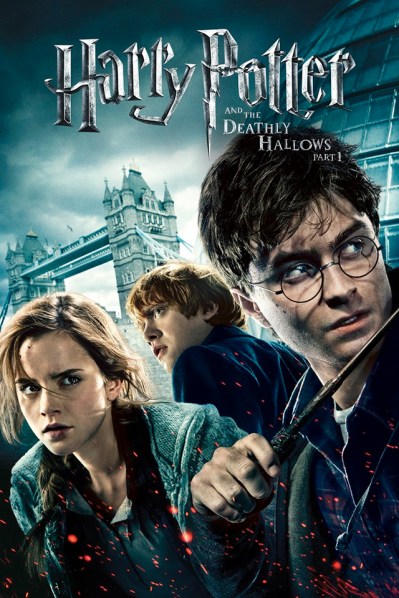
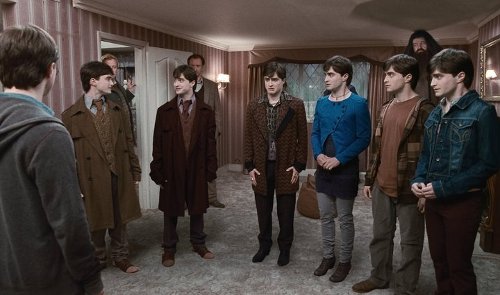 Particularly within the first chapter where everybody who’s helping to protect Harry takes Polyjuice potion enabling everyone in the room to look identical to Harry – a very clever and interesting behind-the-scenes piece regarding how they did this scene on the double disc version.
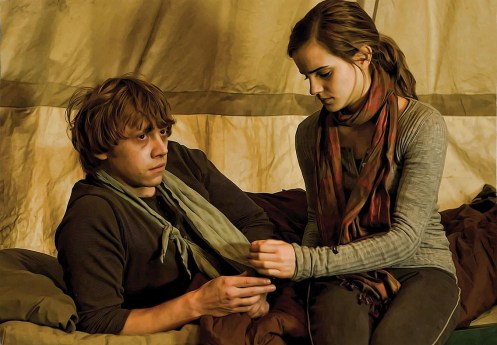 I’m still not convinced about the unorthodox chemistry between Harry and Ron’s sister, Ginny. No matter how many movies, it just doesn’t work for me… However, Ron and Hermione have a more realistic relationship including somewhat hilarious disagreements.
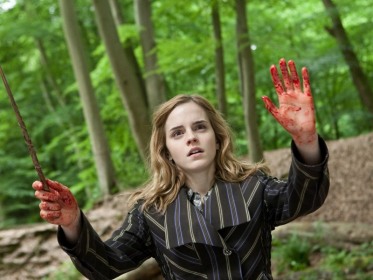
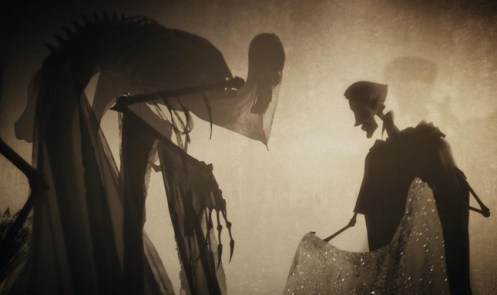 Deathly Hallows has spectacular audio and music as well as flawlessly creepy flashbacks. My favourite scene is when Hermione tells the story of the Deathly Hallows and the relevance of the Elder Wand, Resurrection Stone and Invisibility Cloak. It is so cool – like you’re in the room listening to
 it, it’s the atmosphere of the film that makes it so real.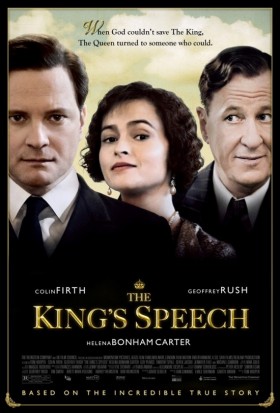
 The King’s Speech is the account of King George VI, who is forced to overcome his debilitating speech impediment to reach his full potential as a strong ruler which he becomes by default due to his Father’s death, King George V (Sir Michael John Gambon) and the resignation of his brother, King Edward VIII (Guy Pearce). Despite the premise of this film sounding as if it may become a repetitive and stationary story of pure frustration and despair, The King’s Speech was actually an incredible journey of expectation, victory and unity.
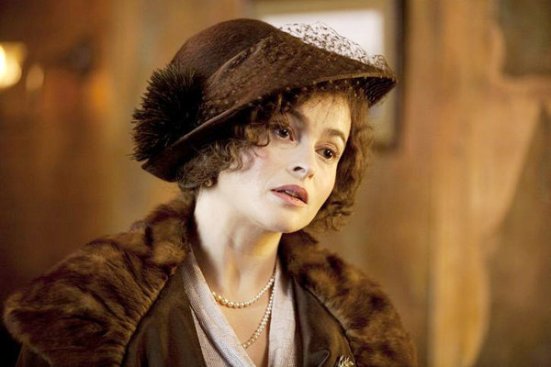
 After countless ‘royalty approved’ doctors, they were about to give up when Queen Elizabeth (Helena Bonham Carter) found Lionel Logue (Geoffrey Rush). This begins the strong friendship created between the King and his unlikely acquaintance as well as the trust that has to be built between patient and doctor. The humourous, innovative methods and remarkable outcomes of the pair are inspirational and uplifting.
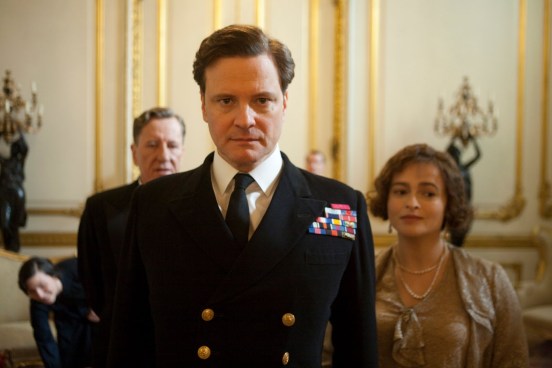 The cast for this movie was not short of perfect. Colin Firth is the protagonist who became the stuttering King George VI convincingly. He shows that he is a versatile actor who is capable of mastering any genre – from Bridget Jones’ Diary to The King’s Speech.
 Tom Hooper shows himself to be quite a genius director. The composition of each shot supports the feelings of the King. With the claustrophobic feel of the environment when he is unable to communicate what he needs to say as well as the unsupportive feel of large and empty rooms. Warm and quality lighting creates the atmosphere of being in the presence of Royalty, contrasting the cold, dim, dark glow of the London streets.
 This is wonderfully layered film which allows viewers to look into it as deep as they like. Therefore, the second and third viewing is as enjoyable as the first. The King’s Speech is a fantastically made film with every shot perfectly composed and every scene well constructed – this really is a motion picture suitable for anybody old enough to appreciate it.
 NZ Film Freak