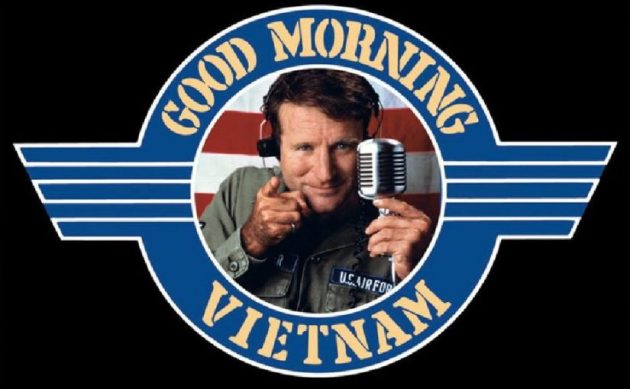
Good Morning, Vietnam

goodmorningvietnam.jpg

Director: Barry Levinson
Writer: Mitch Markowitz
Released: January 1988
Starring: Robin Williams, Forest Whitaker

A unique tale about the Vietnam war, seen through the eyes of an extraverted radio presenter, Adrian Cronauer (Robin Williams), who has been hired as a DJ on the Armed Forces radio station in Vietnam.

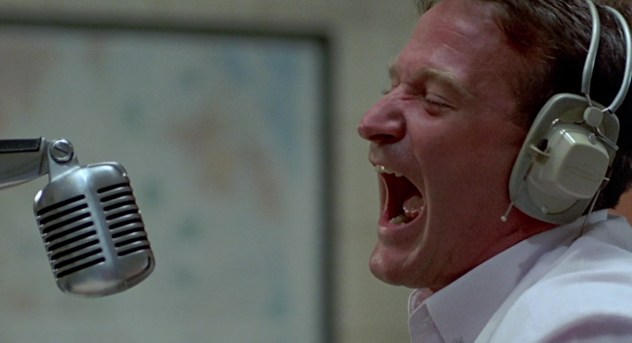
AdrianGoooooooood morning Vietnam! It’s 0600 hours. What does the “O” stand for? O my God, it’s early!
goodmorningvietnam1.jpg

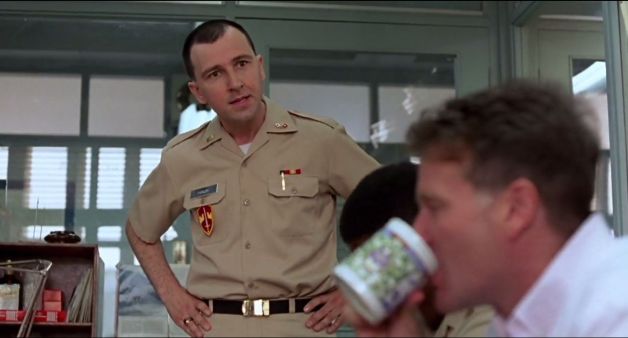
Cronauer is an outlandishly hilarious DJ who keeps the troops’ spirits up while serving in  Vietnam. While most love him, Lt. Steven Hauk (Bruno Kirby) certainly doesn’t. Hauk’s dry, wooden ‘humour’ (or lack thereof) is hysterical, and he believes he can do a far better job on air. So the rivalry begins.

Lt Steven Hauk: I understand you’re pretty funny as a dee-jay and, well, comedy is kind of a hobby of mine. Well, actually, it’s a little more than just a hobby, Reader’s Digest is considering publishing two of my jokes.
Adrian: Really.
Lt Steven: Yeah. And perhaps some night we could maybe get together and swap humorous stories, for fun.
Adrian: Oh, why not? Maybe play a couple of Tennessee Ernie Ford records, that’d be a hoot.
Lt Steven: That’s a joke, right?
Adrian: Maybe.
Lt Steven: I get it.

It’s based on a real life DJ of the same name, but he explains in an interview (on the DVD extras) that the film is only loosely based on his experiences in Vietnam.
goodmorningvietnam3.jpg

Lt. Steven Hauk: Sir, in my heart, I know I’m funny.

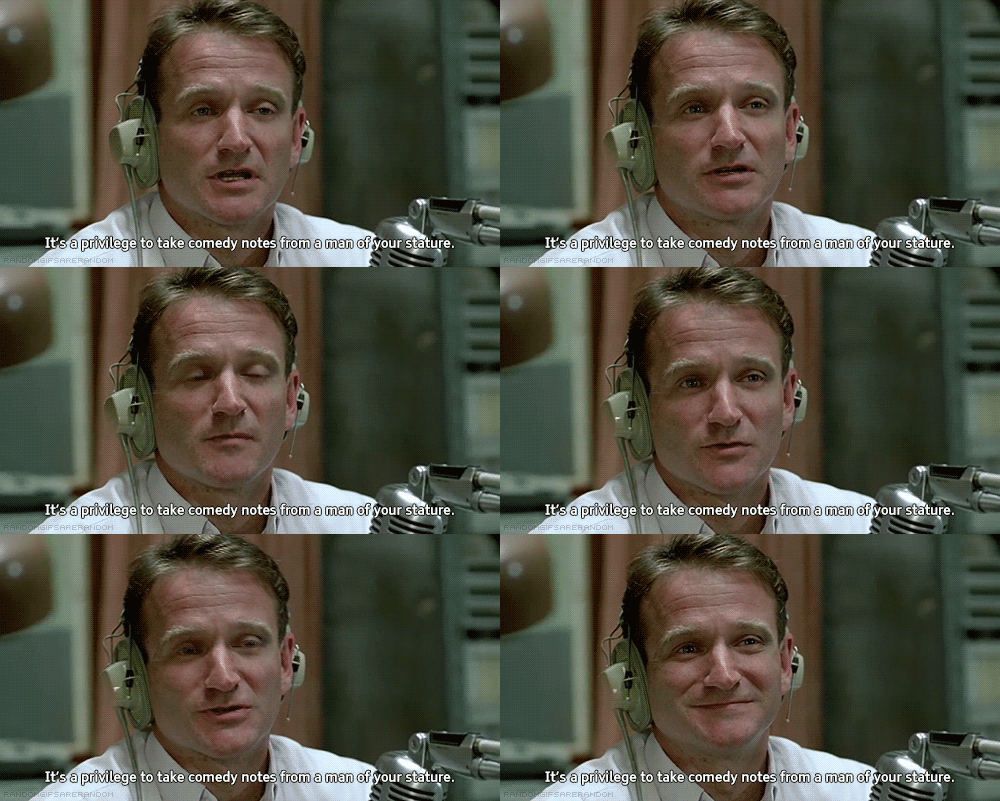
Robin Williams was the only possible choice to play Cronauer. His improv is unlike any other. Apparently there was too much footage to know what to do with once Williams let loose on the microphone! Imagine being the editor of Good Morning, Vietnam, I bet it was all comedy gold! His impersonations are absolutely hilarious!

Adrian as Camp Fashion Consultant: I want to tell you something. You know, this whole camouflage thing, for me, doesn’t work very well.
Adrian: Why is that?
Adrian as Camp Fashion Consultant: Because you go in the jungle, I can’t see you. You know, it’s like wearing stripes and plaid. For me, I want to do something different. You know, you go in the jungle, make a statement. If you’re going to fight, clash. You know what I mean?

Cronauer soon ventures outside of the station and into Vietnam, and that’s when we see the destruction of war. The contrast is shocking and it takes a toll on Cronauer as he can’t believe the amount of things the station isn’t reporting. The news is filtered and censored.

Adrian: RIGHT! In… in Saigon today, according to official sources, nothing actually happened. One thing that didn’t officially happen was a bomb didn’t officially explode at 1430 hours, unofficially destroying Jimmy Wah’s cafe.

The film is a constant blend of comedy and melancholy. About making the best of a bad situation, and keeping perspective. The sadness of the Vietnam war is tangible in this film, but so is the light at the end of the tunnel, which is Cronauer.
goodmorningvietnam4.gif

Despite a few parts that lag, Good Morning, Vietnam is a brilliant film. I’d say it has a great script but it’s actually Williams’ improv that takes the cake. It wouldn’t be a memorable film if it wasn’t for his talent as a performer. It’s so impressive.

Jodie’s rating: 6.5/10
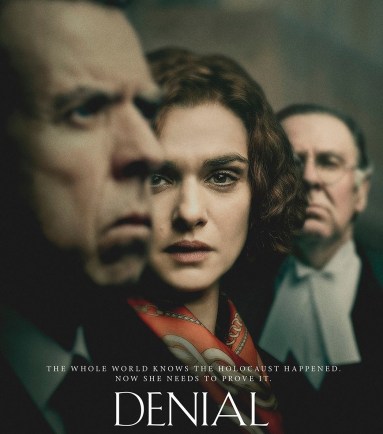
Denial

Denial film review

Director: Mick Jackson
Writer: David Hare
Released: September 2016
Starring: Timothy Spall, Rachel Weisz, Tom Wilkinson, Andrew Scott and Jack Lowden

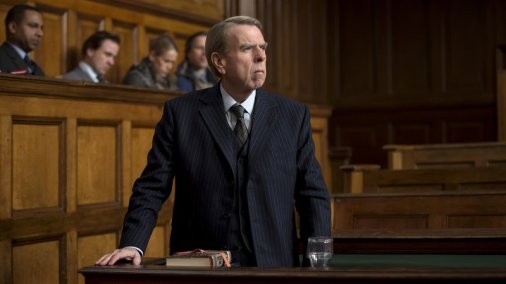
A shocking account of David Irving (Timothy Spall), a Holocaust denier, who takes Deborah Lipstadt (Rachel Weisz) to court for speaking out against him. At its very core, its about free speech, and the abuse of it.

Richard Rampton (Tom Wilkinson): This case is happening to you, but it’s not about you.

While I knew there was a theory of the Holocaust never having happened, I wasn’t actually aware there was a specific Holocaust denier, and court case about it.

As I mentioned in my reviews of The Darkest Hour and The Founder, Denial is another good film-alternative to watching a documentary on the issue.

Denial film review

I did find the film interesting. I enjoyed finding out about the theories and what happened. While it seems rather obvious that sadly, the Holocaust did certainly occur, going about proving this 50+ years after the fact in a court of law proved difficult. The Germans ensured that much of the evidence was destroyed just before the end of the war.

Richard Rampton: We know what it is, it’s how we prove what it is.

I also didn’t realise how different the justice systems are between USA and UK. Irving took Lipstadt to court in the UK because Lipstadt would have to prove why Irving is wrong in order to be found innocent. Whereas in USA, Lipstadt would have been innocent unless proven otherwise by Irving.

Deborah Lipstadt: In the US there is the presumption of innocence.
Anothony Julius: Yeah. Not in the UK.

I was expecting it to be a gripping court drama, like A Few Good Men, where the outcome depends on what questions are asked and how they are answered, with loopholes and twists and gasps. I thought Lipstadt’s lawyers would trip Irving up and drill him on his theories.

Denial film reivew

Unfortunately this is only shown in a couple of scenes. In between, it’s mostly showing Lipstadt – a very loud American from Queens, being overbearing and shouting at her lawyers, telling them what they should and shouldn’t do. Despite her being an intelligent and well-read writer, these scenes portrayed her as a headless chook in a state of panic.

Either way, this isn’t where I wanted the conflict to be. The conflict should be in the courtroom with Irving.

Deborah Lipstadt: Freedom of speech means you can say whatever you want. What you can’t do is lie and expect not to be held accountable… Slavery happened, the Black Death happened. The Earth is round, the ice caps are melting and Elvis is not alive.

Timothy Spall did a good job, as always. Although, he wasn’t as much of a prominent character as I think he should have been. (I wonder how Spall felt about taking this role of a very controversial man, about such a sensitive subject.)

Overall, it is an important story that I am so pleased has been told, but it had the potential to be told with more punch and gall and courtroom-based drama. Sadly, the movie didn’t stay in the courtroom, where I think it should have stayed. The movie was watered down and dragged out because of this.

Jodie’s rating: 6/10


Their Finest

Director: Lone Scherfig
Writer: Based on Their Finest Hour and a Half by Lissa Evens. Screenplay by Gaby Chiappe
Released: April 2017
Starring: Gemma Arterton, Sam Claflin, Bill Nighy, Jack Huston, Helen McCrory, Eddie Marsan, Jake Lacy, Rachael Stirling and Richard E. Grant

Well. That was a pretty enormous disappointment.

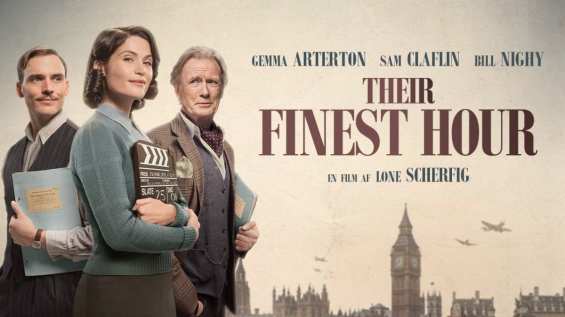
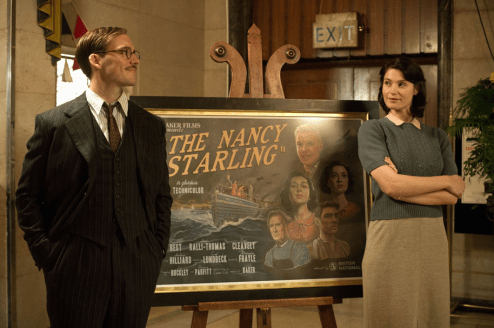
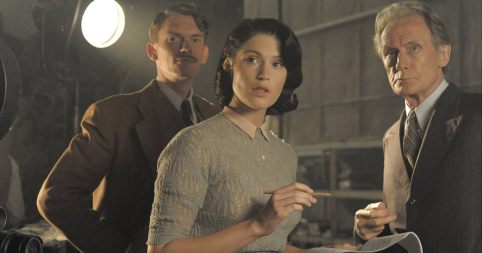
After seeing the trailer, I thought, ‘this is my kind of film’. During 1940, a female protagonist, Catrin (Emma Arterton) proves herself to be a talented screenwriter for propaganda films (created to inform, and to lift the spirits of the public). Bill Nighy – a fabulous actor – plays an egotistical has-been actor called Ambrose, and everyone looks beautiful.

‘Brilliant’, I thought, ‘a coming-of-age drama based around film and writing – both things I love – with a sprinkle of comedy and a touch of tragedy against a wartime backdrop.’

How wrong I was.

The first part is entertaining enough, Catrin is living with her husband who is basically a failed artist and not earning much money. She lands this great writing job where she writes the ‘slop’, or female dialogue.

Tom Buckley (Sam Clafin): Don’t confuse facts with truth… Film is real life with the boring bits cut out.

She soon becomes more successful in a male-dominated world, and warms to a fellow writer. Among this, everyone is dodging London bombings. At the end of every raid, someone else she knows has died.

The story carries the standard structure of any drama. But unfortunately my suspension of disbelief is totally destroyed during the ‘absolute low’. Without giving too much away, after a particularly devastating bombing, the protagonist loses everything.

Afterwards, the story is supposed to take a turn for the better, with a happy ending. However, the protagonist doesn’t ‘win’ at the end, and the story falls off a cliff. I’ve seem this film described as a ‘bittersweet, uplifting romance-drama’. It’s not. It’s an unnecessarily devastating war film.

I was disappointed to say the least. Why tear our hero down so far? Where’s the inspiration in that? This was supposed to be a story about an underdog who succeeded despite the war, despite being a woman in a man’s world, despite being downtrodden and disrespected. (Her lack of ability to stand up for herself is frustrating to say the least.)

In fact, it’s a story about an underdog who, with a lot of hard work, succeeds professionally and personally despite everything – until the rug is pulled from under her and she ends up worse-off than ever. Who the hell wants to watch a film like that? It just made me feel bad.

I enjoyed how the story was about a writer, who in some scenes is shown to be rewriting how her day turned out, or rewriting a conversation she had where she wished she said something differently (something I sometimes do!). I also liked the exploration into why people love films.

Tom Buckley: Why do people like films? It’s because stories are structured. They have a shape, a purpose, a meaning; and when things go bad they’re still a part of a plan; there’s still a point to them. Unlike life.

 I like how she had professional success and that she was proud of herself, but overall, I walked away with the message ‘give it a go despite the odds. Try really hard. But you’ll fail and end up with no one and nothing anyway’.

What the hell, Bill Nighy. I trusted you.

Jodie’s rating: 4/10

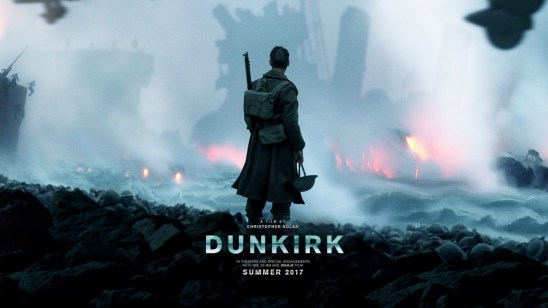
Dunkirk

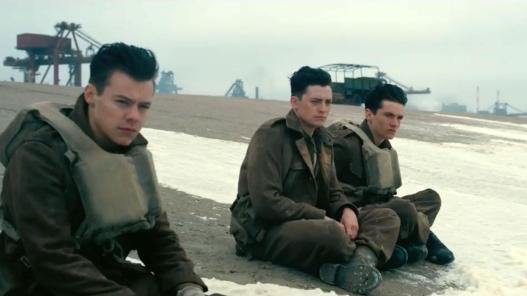
dunkirk_1

Directed: Christopher Nolan
Written: Christopher Nolan
Released: July 2017
Starring: Fionn Whitehead, Tom Glynn-Carney, Jack Lowden, Harry Styles, Aneurin Barnard, James D’Arcy, Barry Keoghan, Kenneth Branagh, Cillian Murphy, Mark Rylance and Tom Hardy

I don’t know where to start – I’m about to word-vomit on the page! There’s so much to say, so I’ve broken it up with little titles so that you don’t get too overwhelmed…

Well firstly, I’ll set the scene: I went to see this film with my significant-other in the town of Wareham, Dorset. We went to the REX Cinema, which is an independent cinema that was built in 1889. The small hall was packed when we went – I even had to book tickets two weeks in advance! The showing attracted many locals, likely due to the local film locations such as Swanage railway station and Weymouth.

Dunkirk is definitely the best war-based film I have seen since Saving Private Ryan.

Before I continue, I must mention that ‘yes’, this film is based during the war – as are plenty of films. But this one is different. It’s not full of blood and gore – it feels more like an emotional documentation of a snapshot in time. A remarkable story indeed.

This is an incredibly moving and haunting survival film about British soldiers desperately trying to escape the ever-approaching Nazi German forces. They’re attacking by air and land. The British soldiers attempt to evacuate France at Dunkirk to England via ship, despite all odds.

How the story is told:
The film is told by intertwining three stories, which transports you back in time by putting you in the shoes of various characters:

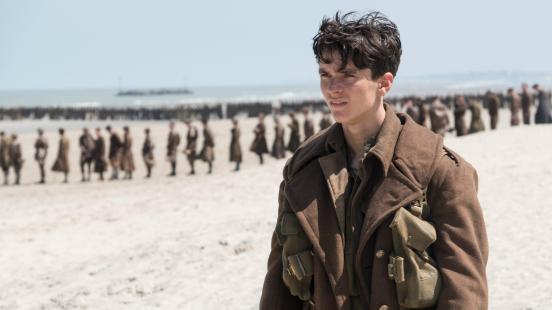
Land
“You can practically see it from here… Home.”Dunkirk film review
Soldiers evacuating the beach. This story is told within a time frame of one week through the eyes of Tommy* (Fionn Whitehead). The sky is dark and the sea is just as unwelcoming as the freezing cold beach they’re stranded on. With enemy planes flying over-head, the foot-soldiers must have felt insignificant and vulnerable as the British await for an overcrowded ship to take them home.
* Named after the slang term for a common British Army Solider.

Sea
“Men my age dictate this war. Why should we be allowed to send our children to fight it?”

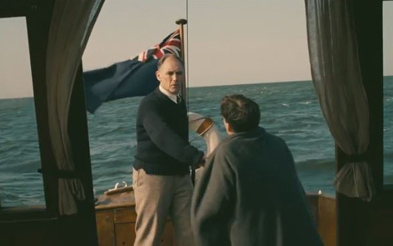
dunkirk film
Brave, unarmed civilians journeying from Dorset into the rough channel on their wooden boats. They try to save as many men as they can from overturned Navy ships that are bleeding oil into already blackened seas, with men fighting to escape the ruins in a blind panic. This story is told within the time frame of 24 hours from the point of view of Mr. Dawson (Sir Mark Rylance) and his son Peter (Tom Glynn-Carney).

Air
Why [would the Germans] waste precious tanks when they can pick us off from the air like a fish in a barrel?”

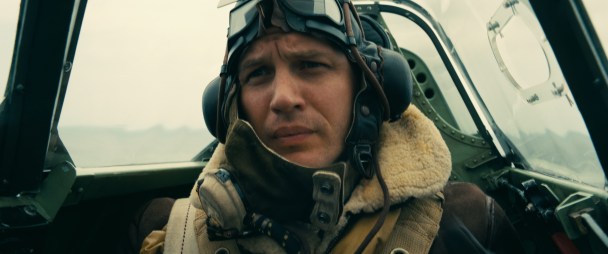
Dunkirk film review

Royal Air Force pilots flying planes over the English channel, protecting the ships and boats carrying soldiers from Dunkirk as they aim for England’s shore. The Spitfires scream overhead, not immediately knowing if they’re British or German… The feeling of claustrophobia from being strapped inside a plane without fuel, or being stuck in the cockpit of a sinking plane… It creates an atmosphere thick with anxiety that can be felt all the way to the cinema chair. This section of the film is told in a time frame of one hour from the point-of-view of RAF pilot, Farrier (Tom Hardy).

These intertwining stories of various time windows was genius. Just enough time to understand each character and what they were risking, but not so dragged-out that it becomes a Peter Jackson marathon movie.

I really felt like I got a glimpse into how the soldiers, pilots and civilians felt in that moment in time.

Audio:
The first thing that struck me was the audio (this movie is a cinematic essential – don’t wait for the DVD! Buy a ticket! You need the surround-sound). The sound of ships creaking, the sound of the Spitfires over-head, the sound of distant gunfire. All of which clearly inspired the Hans Zimmer soundtrack. The audio of this film is an art within itself. Incredible.

Commander Bolton: “The tide’s turning now.”

Captain Winnant: “How can you tell?”

Commander Bolton: “The bodies are coming back.”

Casting:
I didn’t recognise many of the actors apart from half of the Inception and Batman cast, of course (Michael Cain’s voiceover, Tom Hardy and Cillian Murphy).

Dunkirk film review - Harry Styles

But the actors were all fascinating to look at – they have interesting faces (particularly Barry Keoghan’s character, George) that makes you want to study and stare at them.

Of course, there is Harry Styles – Nolan reckons he didn’t have the faintest Scooby-Doo about the level of Styles’ fame before casting him. Poppycock if you ask me. Nevertheless, he doesn’t exactly steal the show, and he doesn’t look too out of place either.

Conclusion:
This is a once in a lifetime film. It’ll make you jump, it’ll make you cry, it’ll send chills down your spine, but most importantly it makes you think about what could have been.

Blind Man: “Well done lads. Well done.”

Alex: “All we did is survive.”

Blind Man: “That’s enough.”

I got so choked up at that line. “That’s enough.” I was gone, and so was my mascara.

After the Dunkirk screening at REX cinema, the audience (predominately Baby Boomers) were vocal post-showing as they discussed their stories amongst themselves. One gentleman even slapped my fiancé on the back and said: “it would have been you should the war have happened today!” Chilling. Particularly because we walked out on to the old, narrow streets of Wareham, which made me feel like I was still being transported back to war-time Dorset.

The next day I took out a book called ‘World War II for beginners’ and a book called ‘Frontline Dorset’ to educate myself more on this unfathomable time. 

Jodie’s rating: 9/10


My Favourite Scene: Saving Private Ryan

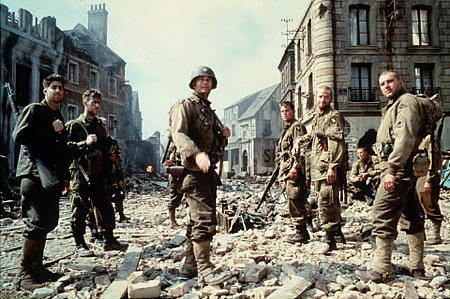
Piaf-spr

Saving Private Ryan (1998) “…and I find that marvellous.”

I had first heard of Edith Piaf when I saw Inception (Non, Je Ne Regrette Rien). She is a famous French singer from the twenties through to the sixties, and I adore her music.

Since learning about her songs, this scene in Saving Private Ryan jumped out at me. It is a bonding scene between the soldiers that begins with a conversation about Piaf’s song (Tu es Partout), like most of my other favourite scenes, it’s slower paced and one of the quieter moments of the movie.

I just really enjoy one of the more sensitive soldiers translating the song to the others.

Jodie.


My Favourite Scene: The Pianist

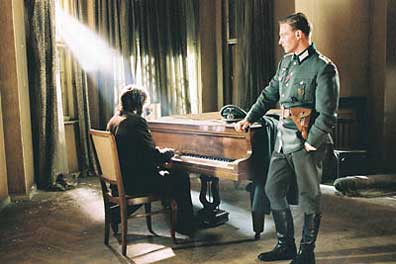
Captain Wilm Hosenfeld

The Pianist (2002): Playing piano for a soldier

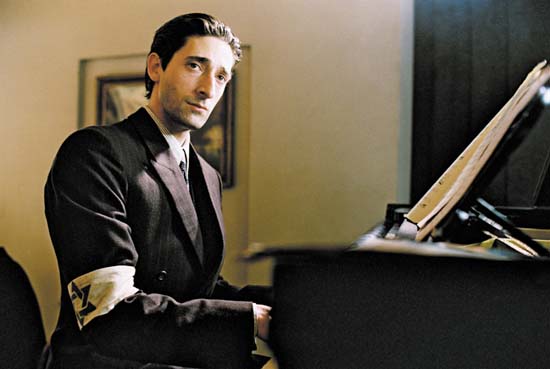
In this scene, a German Soldier, Captain Wilm Hosenfeld (Thomas Kretschmann), discovers Władysław Szpilman’s (Adrian Brody) hiding place. Instead of killing him, he helps him survive.

But before leaving after their first encounter, the German Soldier asks what he will  do after the war is over. “Play the piano again” he answers. “Show me” the German soldier replies.

After two years of not being able to do the one thing he loves, Władysław does so, happily. He looks like he is healing himself after the battle to survive the war, which is slowly coming to an end.

The PianistI think this scene intrigues me because I believe the soldier just wanted the hurt of the war to end. After watching the whole film showing the destruction German Soldiers brought, he makes us remember that they are only human too. He seems to be thinking about the actions of his soldiers, what is right or wrong, perhaps his loss of faith in fighting… Music can provoke many feelings.

Wilm Hosenfeld did in fact make a habit of helping Jewish people survive in labour camps, before dying in a POW camp himself, possibly after being tortured.

I think, in this scene, both parties are united by music; healing together and making peace.

Jodie.